
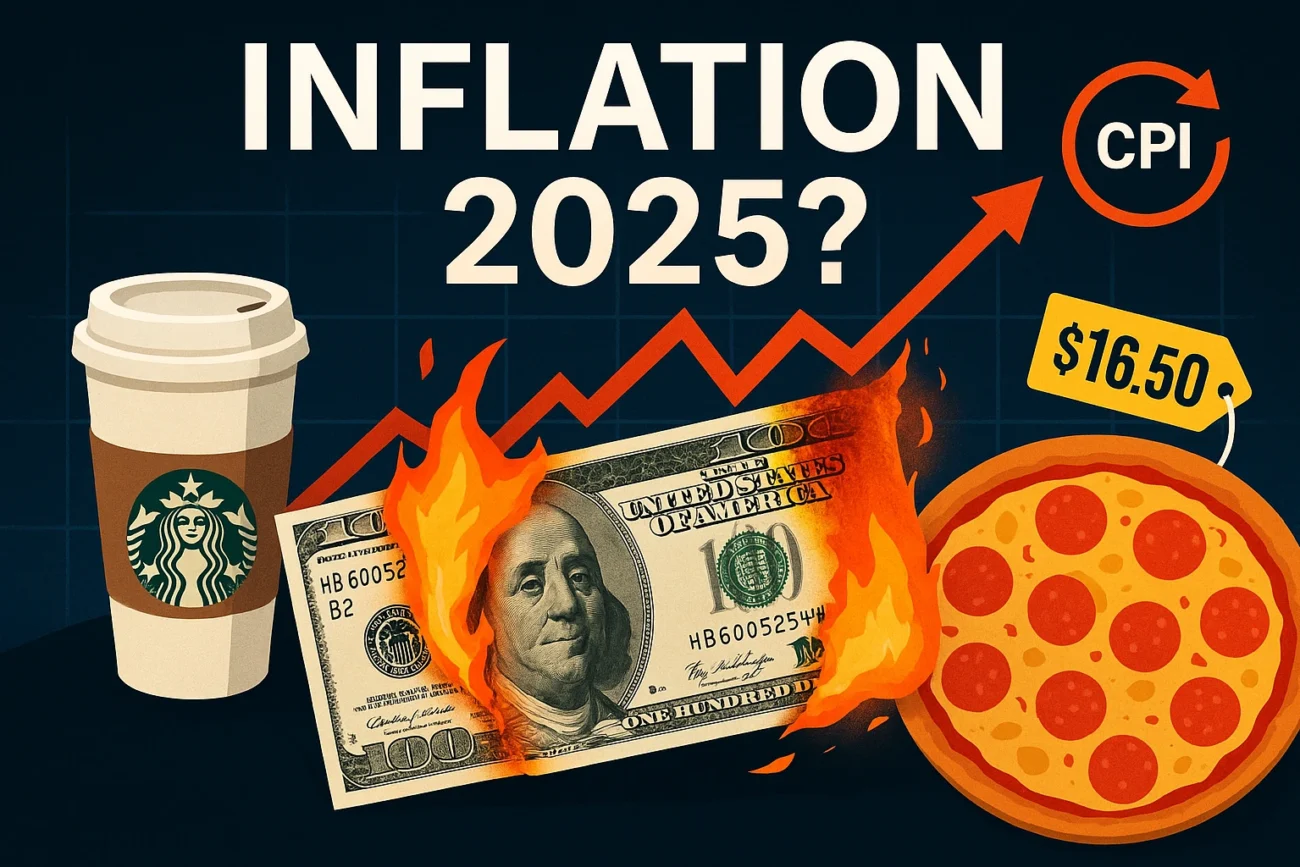
Inflation is often dubbed a “silent tax” because it erodes every dollar you own—without asking for permission. From the price of a cup of coffee in Seattle to college tuition in Boston, rising costs quietly chip away at purchasing power. This article explains what inflation is, why it happens, how it impacts American consumers and markets, and—most importantly—offers nine practical ways to protect your wealth in 2025 and beyond.
1. What Is Inflation? A Simple Explanation
-
Academic Definition
Inflation is the general and sustained increase in prices of goods and services in an economy, causing the real value of money to decline over time. In simpler terms, each dollar buys you less with each passing year.
-
Real-World Example: “The Pepperoni Pizza Test”
Let’s say in 2024 you pay $15 for a 12-inch pepperoni pizza. By 2025, the same pizza costs $16.50. That $1.50 increase represents a 10% inflation rate for pizza. When other goods like groceries, gas, rent, and services see similar price hikes, that’s broad inflation.
2. The Three Main Drivers of U.S. Inflation
-
Demand-Pull Inflation
When the economy runs hot—strong employment, rising wages, high consumer confidence—Americans spend more. When aggregate demand exceeds supply capacity, prices rise. For instance, post-pandemic car demand spiked, inventory dropped, and prices soared.
-
Cost-Push Inflation
When production costs go up, companies are forced to raise prices. In 2022–2023, surging oil prices pushed up gas and shipping costs. Rising wages in retail and hospitality led to higher restaurant menu prices nationwide. Higher input costs ripple down the supply chain.
-
Excess Money Supply
When the Federal Reserve injects too much liquidity—via near-zero interest rates or large-scale asset purchases—more dollars chase the same number of goods. If productivity doesn’t keep up, prices must rise. The 2020–2021 stimulus packages are a clear example.
3. How Does Inflation Impact U.S. Households and Markets?
-
Cash Loses Value
If inflation (CPI) is 4% annually and your savings account yields only 1%, your real return is –3%. Your $10,000 today would only buy $9,700 worth of goods a year later.
-
Cost of Living Rises
Gas, groceries, health insurance, daycare—almost every expense climbs. If wages don’t keep pace, households feel poorer, even if nominal income rises.
-
Market Volatility
To cool high inflation, the Fed raises interest rates. Treasury yields and money market returns rise, while growth stocks and highly leveraged real estate take a hit. Investors must rebalance portfolios.
4. Is Inflation Always Bad? – The “Sweet Spot” of 2–4%
-
Moderate Inflation (2–4%/year)
This level encourages spending and investing over hoarding cash, promoting sustainable GDP growth. That’s why the Fed targets around 2% inflation.
-
High Inflation & Hyperinflation
When inflation exceeds 10% annually, it undermines trust in the dollar, disrupts long-term contracts, and drives capital from fiat money into hard assets. Hyperinflation (>50% per month), seen in countries like Venezuela or Zimbabwe, can destroy purchasing power overnight.
5. How the U.S. Government and Fed Combat Inflation
-
Raising Interest Rates
The FOMC hikes the federal funds rate, making borrowing costlier and curbing large consumer spending. Mortgage, auto loan, and credit card rates all rise, cooling big-ticket purchases.
-
Quantitative Tightening (QT)
The Fed reduces its balance sheet, draining liquidity and pushing up yields, thereby slowing the flow of cheap money.
-
Supply-Side Solutions
Policies promoting domestic manufacturing, easing supply chain bottlenecks, or lowering import tariffs can boost supply—helping stabilize prices without crushing demand.
6. 9 Inflation-Proofing Strategies for 2025
-
Diversify Your Portfolio
Allocate funds across Treasuries, large-cap equities, commodities, REITs, and short-term cash instruments to avoid single-shock exposure.
-
Own TIPS
Treasury Inflation-Protected Securities adjust their principal based on CPI, safeguarding your bond portfolio from inflation.
-
Add Commodities or Commodity ETFs
Energy, agriculture, and industrial metals typically rise when the dollar’s purchasing power declines. Low-cost ETFs like DBC offer broad exposure.
-
Invest in Quality Real Estate
Rental prices and land values tend to rise with inflation—especially in hot markets like Austin or Raleigh. Consider REITs for liquidity or direct ownership for leverage.
-
Buy Pricing Power Stocks
Companies with strong brands—like Coca-Cola, Apple, or P&G—can pass rising input costs to consumers without losing sales.
-
Use Floating-Rate Bonds
These bonds adjust coupons based on short-term interest rates, offering protection as the Fed tightens policy.
-
Boost Active Income
Side hustles, consulting, dividends, and gig-economy work can generate income that outpaces CPI growth.
-
Monitor Policy Signals
Track Fed statements and key data like CPI and PCE. Be ready to pivot your portfolio when policy shifts.
-
Manage Business Costs
Lock in long-term input prices, hedge commodities via futures, and optimize inventory to prevent margin squeeze.
7. Conclusion: Make Inflation Work for You—Not Against You
Inflation is inevitable, but the extent to which it erodes your wealth depends on your preparation. Treat the annual inflation rate as a benchmark: any investment earning below that is losing real value. By understanding demand-pull, cost-push, and money supply inflation—and by applying a diversified, flexible asset strategy—you can not only preserve but also find opportunity in a rising-price environment. Stay informed, remain disciplined, and let knowledge—not fear—guide your decisions in 2025.